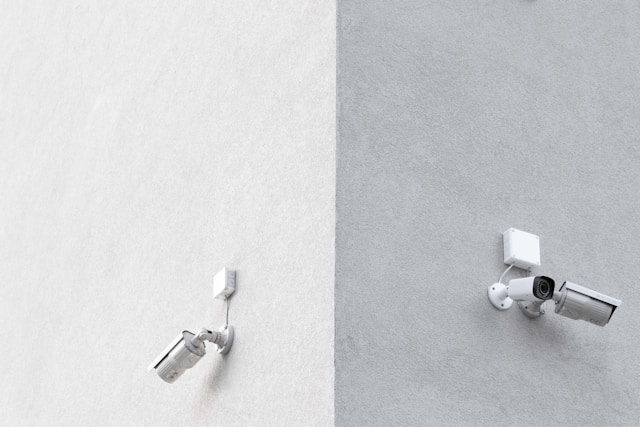
TL;DR: Retail CCTV systems in Singapore do far more than deter theft. Modern surveillance technology helps retailers analyze customer behavior, optimize store layouts, manage staff performance, and ensure regulatory compliance—making CCTV one of the highest-ROI investments a retailer can make.
Walk into almost any retail store in Singapore and you’ll spot them—small, unobtrusive cameras mounted near entrances, above shelves, and at checkout counters. For years, most retailers installed CCTV with one goal in mind: catch shoplifters. And while loss prevention remains important, limiting your surveillance system to that single purpose is leaving serious money on the table.
Singapore’s retail landscape is fiercely competitive. With over 23,000 retail establishments operating across the island and consumer expectations rising year after year, retailers need every advantage they can get. CCTV technology has evolved dramatically over the past decade, and today’s systems are capable of delivering insights that touch nearly every corner of retail operations—from store design and staff management to customer experience and compliance.
This guide breaks down how Singapore retailers can extract maximum value from their CCTV investments, moving well beyond basic security into genuine business intelligence.
Why Singapore Retailers Are Rethinking Their CCTV Strategy
The traditional view of CCTV as a purely reactive tool is fading fast. Reactive security—reviewing footage only after an incident—captures value after the damage is done. Proactive surveillance, by contrast, generates continuous data that informs decisions before problems arise.
Singaporean retailers are increasingly adopting this proactive mindset, driven by several converging factors: rising labor costs, shrinking margins, and growing pressure to deliver personalized in-store experiences that online competitors cannot replicate. A well-configured commercial CCTV security system, paired with modern video analytics software, becomes less of a security camera and more of a retail intelligence platform.
The shift is also being accelerated by technology. Today’s IP cameras offer resolutions that far exceed what older analog systems could produce. When combined with AI-powered analytics, these cameras can count footfall, track movement patterns, detect queue lengths, and even flag staff behavior anomalies—all in real time.
How CCTV Helps Retailers Understand Customer Behavior
What is footfall analysis and why does it matter for retailers?
Footfall analysis uses CCTV-linked software to count how many customers enter your store, when they arrive, and how long they stay. For Singapore retailers, this data is especially valuable given the high cost of retail space—whether you’re in Orchard Road or a heartland mall.
Understanding peak traffic hours allows retailers to align staffing schedules with actual demand, reducing both overstaffing during quiet periods and understaffing during rushes. A store that sees consistent traffic spikes between 12pm and 2pm on weekdays can use that data to schedule additional floor staff during lunch hours, directly improving customer service without inflating the overall payroll.
How do heat maps generated by CCTV reveal store layout problems?
Heat mapping is one of the most powerful—and underused—applications of retail CCTV. By tracking customer movement paths throughout a store, analytics software generates visual maps showing which areas attract the most attention and which are consistently overlooked.
A product display that management assumes is high-visibility might reveal, through heat map data, that customers rarely venture past the second aisle. Conversely, an end-of-aisle promotion near the checkout queue might be performing far better than assumed. Armed with this data, retailers can make evidence-based decisions about product placement, promotional displays, and store layout redesigns—decisions that have a direct impact on sales per square foot.
Can CCTV measure how long customers spend at specific displays?
Yes. Dwell time analysis measures how long shoppers pause at particular sections, displays, or product categories. High dwell time often signals strong interest; low dwell time near a promoted product may indicate poor signage, unclear pricing, or an unappealing display.
For Singapore retailers running promotional campaigns—especially during major shopping events like the Great Singapore Sale or Hari Raya—dwell time data helps quantify whether a campaign is actually drawing attention in-store, not just generating online buzz.
Using CCTV to Improve Staff Management and Productivity
How can CCTV support staff performance monitoring in retail stores?
Staff management is one of the most sensitive applications of retail CCTV, and one that requires transparency with employees. When implemented correctly and communicated clearly, CCTV can support—not replace—good management practices.
Specifically, video footage allows retail managers to assess whether customer service standards are being upheld during peak periods. Are staff members stationed at designated posts? Are long checkout queues being addressed promptly? Is the floor team engaging with browsing customers or clustering at the back of the store?
These observations are not about surveillance for its own sake. They create accountability structures that benefit both the business and customers. Retailers that use CCTV data as part of regular staff reviews—rather than as a punitive tool—tend to see improvements in floor behavior and service consistency.
How does CCTV help with shift scheduling based on store traffic data?
Pairing footfall analytics with shift scheduling tools allows retailers to build rosters based on actual traffic patterns rather than estimates. Over time, CCTV-derived data reveals reliable traffic rhythms—quieter Tuesday mornings, busy Saturday afternoons, predictable post-payday spikes.
This means managers spend less time guessing and more time acting on evidence. Labor costs are reduced without compromising service quality, and staff are deployed where and when they’re genuinely needed.
Queue Management: Reducing Wait Times and Cart Abandonment
Long queues are a known driver of in-store cart abandonment—customers who physically leave a store without completing a purchase after deciding the wait is not worth it. In Singapore’s fast-paced retail environment, where customers have abundant alternatives, this is a real and measurable problem.
Modern CCTV systems with queue detection capabilities can alert floor managers in real time when a checkout queue exceeds a defined threshold. This triggers the opening of additional registers or the deployment of mobile payment staff, reducing average wait times before customers lose patience.
Retailers can also use historical queue data to identify recurring bottlenecks—specific times of day or week when queues consistently form—and address the root cause proactively rather than reactively.
CCTV and Loss Prevention Beyond Shoplifting
What types of retail losses can CCTV detect beyond external theft?
Shoplifting by customers is the most obvious form of retail shrinkage, but it represents only a portion of total losses. Internal theft, administrative errors, and vendor fraud are significant contributors that often go undetected for far longer.
CCTV systems positioned at points of sale, stockrooms, and delivery bays help retailers monitor for:
- Employee theft: Including sweethearting (where a cashier fails to scan items for accomplices) and unauthorized discounts
- Vendor delivery discrepancies: Ensuring that delivered stock matches invoiced quantities
- Procedural non-compliance: Staff bypassing cash-handling procedures or accessing restricted areas without authorization
In each case, CCTV provides both a deterrent and an audit trail—two things that internal investigations would otherwise struggle to produce.
Regulatory Compliance and Workplace Safety in Singapore Retail
Does Singapore law require retailers to maintain CCTV footage?
Singapore does not impose a blanket legal requirement for retailers to install CCTV. However, certain sectors—food and beverage, pharmacies, and financial services retail—may face industry-specific guidelines. Additionally, under Singapore’s Personal Data Protection Act (PDPA), retailers that deploy CCTV must ensure footage is collected and stored in compliance with data protection requirements, including appropriate retention periods and access controls.
Retailers should also note that CCTV footage captured in staff areas must be disclosed to employees. Transparency is not just good practice—it is a legal obligation under Singapore’s employment framework.
How can CCTV improve workplace safety in retail environments?
Slip-and-fall incidents, equipment misuse, and unsafe stockroom practices are occupational hazards in retail environments. CCTV systems positioned in stockrooms, loading bays, and wet areas provide a record of incidents as they occur, supporting accurate insurance claims and identifying recurring safety hazards.
Beyond incident response, footage review can reveal patterns—a specific section of the store that sees repeated minor accidents, or a stockroom procedure that consistently creates unsafe conditions. Proactively addressing these patterns reduces both liability and the human cost of workplace injuries.
Choosing the Right CCTV System for a Singapore Retail Store
What CCTV features should Singapore retailers prioritize when choosing a system?
Not all CCTV systems offer the same capabilities. Singapore retailers evaluating systems should consider:
- Resolution: 4K cameras provide the detail needed for facial recognition and fine behavioral analysis, though HD cameras remain cost-effective for general monitoring
- AI-powered analytics: Look for platforms that support footfall counting, heat mapping, queue detection, and behavioral alerts out of the box
- Cloud storage and remote access: Enables multi-site retailers to monitor all locations from a central dashboard
- Integration capability: Systems that integrate with POS data, staff scheduling software, and inventory management tools deliver compounded value
- PDPA compliance features: Data retention controls, access logging, and encryption are non-negotiable for Singapore-based retailers
Is CCTV a worthwhile investment for small retailers in Singapore?
For small retailers, the upfront cost of a sophisticated CCTV system may feel prohibitive. However, entry-level AI-enabled systems have become significantly more affordable in recent years, and the ROI case is increasingly compelling even for single-location operators.
A small retailer who reduces shrinkage by 1–2% of annual revenue, optimizes staffing based on footfall data, and improves conversion through better display placement can recover the cost of a mid-tier system within 12 to 18 months. The key is ensuring the system is configured to generate usable data—not just record footage that no one reviews.
What the Future of Retail CCTV Looks Like in Singapore
The next wave of retail surveillance technology in Singapore is already emerging. Retailers at the cutting edge are experimenting with anonymous demographic analysis—using AI to estimate the age and gender of customers without capturing personally identifiable information—to better understand their in-store audience. Others are integrating CCTV data with loyalty program data to track the in-store journeys of known customer segments.
Singapore’s Smart Nation initiative continues to accelerate adoption of AI-enabled infrastructure across sectors, and retail is no exception. Retailers who build the capability to capture, analyze, and act on CCTV-derived data today will be positioned to adopt more sophisticated tools as they become available—without starting from scratch.
The Bottom Line: CCTV Is a Retail Tool, Not Just a Security Camera
Security is a legitimate and important reason to invest in CCTV. But treating surveillance as nothing more than a theft deterrent means ignoring the broader value that modern systems deliver every day—insights into customer behavior, operational inefficiencies, staff performance, and safety risks that would otherwise remain invisible.
For Singapore retailers operating in a high-cost, high-competition environment, that invisible data is exactly what can separate a thriving store from a struggling one. The cameras are already there. The question is whether you’re making them work as hard as they could.
If you’re considering upgrading your retail CCTV system or implementing analytics for the first time, consult with a certified security integrator who specializes in retail environments in Singapore. Ask specifically about AI analytics capabilities, PDPA compliance, and integration with your existing operations tools.
Frequently Asked Questions About Retail CCTV in Singapore
What is the legal requirement for CCTV in Singapore retail stores?
There is no universal legal requirement for Singapore retailers to install CCTV. However, retailers that do deploy cameras must comply with the Personal Data Protection Act (PDPA), which governs how footage is collected, stored, and accessed. Employees must be informed of CCTV use in staff areas.
Can retail CCTV systems track customer behavior without violating privacy laws?
Yes, provided the system is configured to collect anonymous behavioral data rather than personally identifiable information. Heat mapping, footfall counting, and dwell time analysis can all be performed without capturing or storing individuals’ identities, keeping retailers compliant with PDPA requirements.
How much does a retail CCTV system cost in Singapore?
Costs vary significantly based on the number of cameras, resolution, analytics capabilities, and storage options. A basic system for a small store may start from a few hundred dollars, while a fully integrated AI analytics system for a larger retailer can run into tens of thousands. Cloud-based subscription models have made advanced analytics more accessible for smaller operators.
How long should retailers retain CCTV footage in Singapore?
Singapore’s PDPA requires that personal data—including video footage—not be retained longer than necessary for its stated purpose. Most retailers retain footage for 14 to 30 days for general security purposes, though this may be extended when footage relates to an ongoing investigation.
What is the difference between standard CCTV and AI-powered video analytics?
Standard CCTV records footage passively and requires human review to extract insights. AI-powered video analytics software processes footage in real time, automatically generating data on footfall, queue lengths, customer movement, and behavioral anomalies—without requiring staff to monitor screens continuously.