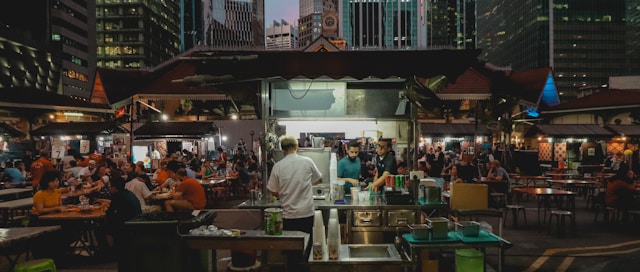
TL;DR: Zi Char restaurants are beloved communal dining institutions in Singapore and Southeast Asia, known for affordable, wok-cooked dishes served family-style. Their enduring popularity comes down to a powerful mix of nostalgic flavors, social dining culture, and cooking techniques that are nearly impossible to replicate at home.
There’s a particular kind of satisfaction that comes with sitting around a lazy Susan at a zi char restaurant—the kind where dishes keep arriving, someone’s always reaching across the table, and the conversation never quite stops. It’s loud, it’s warm, and the food is almost always exactly what you were hoping for.
Zi char (煮炒), which loosely translates to “cook and fry” in Hokkien, refers to a style of casual Chinese cooking that originated in Singapore’s hawker culture. These aren’t fine dining establishments. Most operate out of open-air coffee shops or modest standalone eateries, with plastic stools, fluorescent lights, and menus scrawled on laminated sheets. Yet they draw crowds night after night—families celebrating birthdays, colleagues winding down after work, couples splitting a plate of sambal kangkong on a Tuesday.
So what is it about zi char that keeps people coming back? The answer runs deeper than good food.
What Makes Zi Char Different From Other Chinese Dining Styles?
Zi char restaurant occupies a unique middle ground in Chinese dining culture. It’s more substantial than hawker stall food—where a single dish is typically ordered per person—but far less formal than a Chinese restaurant banquet. The model is communal by design: a group orders multiple dishes to share, everything arrives at roughly the same time, and the meal becomes less about individual portions and more about the collective experience at the table.
The cooking style draws heavily from Cantonese, Hokkien, and Teochew traditions, adapted over generations to suit local tastes. Dishes are typically wok-fried over extremely high heat—a technique known as wok hei, which imparts a smoky, slightly charred flavor that home stoves simply can’t replicate. This is part of zi char’s enduring appeal: the food genuinely tastes different when it’s made in a commercial wok over a roaring flame.
Classic zi char staples include:
- Cereal prawns — wok-fried prawns coated in buttery, crispy oat cereal
- Salted egg yolk crab — a richer cousin of the iconic chili crab
- Sambal kangkong — water spinach stir-fried with shrimp paste and chilies
- Horfun with gravy — flat rice noodles in thick, savory egg gravy
- Tofu with minced meat — silken tofu braised with pork and dark soy sauce
Each dish is familiar, yet each restaurant has its own version. That small variation—the extra garlic someone adds, the specific chili blend, the ratio of sweet to savory—is part of what makes regulars loyal.
Why Do Zi Char Restaurants Inspire Such Strong Loyalty?
The Role of Nostalgia in Food Choices
Food memory is remarkably powerful. Research in sensory psychology consistently shows that taste and smell are more strongly linked to emotional memory than any other sense. For many Singaporeans and Malaysians, zi char is tied to childhood—specifically to the memory of being taken out for a “special dinner” that wasn’t quite a fancy restaurant but felt like one.
The zi char table was where families gathered after school examination results, where grandparents ordered dishes the kids loved, where grown children brought their parents on weekends. Over time, those flavors become more than food. They become a form of emotional continuity.
This is why even younger diners, who have access to cuisines from every corner of the globe, still find themselves gravitating toward zi char when they want something comforting and familiar. The food doesn’t need to be reinvented—its consistency is precisely the point.
Zi Char as a Social Ritual, Not Just a Meal
The communal format of zi char dining does something that individual meals can’t: it creates conversation by design. When you’re ordering for a table rather than yourself, you negotiate, you recommend, you debate whether to get the black pepper beef or the honey pork ribs (the correct answer is both). The shared plates mean everyone is involved in the meal from the moment the menu arrives.
This ritual also lowers the stakes of dining out. There’s no pressure to order correctly, no anxiety about making the wrong choice. If one dish doesn’t land, there are four others on the table. The abundance of zi char—generous portions, multiple dishes, usually very reasonable prices—creates a particular kind of ease that more curated dining experiences often lack.
The Master Wok: Why Zi Char Cooking Is Nearly Impossible to Copy at Home
One of the reasons people keep returning to zi char restaurants is simple: you can’t make it taste the same at home. The gap between a home-cooked stir-fry and a zi char version of the same dish isn’t about skill—it’s about equipment and fire.
Commercial woks used in zi char kitchens sit over gas burners that produce heat outputs of 150,000 BTU or more. The average home stove produces around 10,000–15,000 BTU. That difference in heat is what creates wok hei—the complex, slightly smoky flavor that develops when ingredients hit an almost-impossibly-hot surface for a brief, controlled period. The proteins caramelize differently, the vegetables retain their texture, and the sauce reduces in seconds rather than minutes.
Zi char cooks—many of whom have been working the same wok for decades—develop an intuitive command of heat, timing, and seasoning that takes years to build. There’s a reason regulars talk about specific chefs, not just specific restaurants.
How Have Zi Char Restaurants Adapted Without Losing Their Identity?
New Dishes, Same Spirit
Zi char menus have never been static. The cuisine has always absorbed influence—the salted egg yolk trend of the 2010s, for example, found its way onto zi char menus almost immediately, spawning salted egg crab, salted egg tofu, and salted egg fish skin. More recently, mala (numbing spice) variations have appeared alongside traditional favorites.
What’s notable is how these additions are absorbed rather than replacing what came before. A zi char menu in 2024 might feature truffle fried rice alongside the classic pineapple sweet and sour pork—not as a statement of reinvention, but as a natural expansion. The underlying philosophy stays the same: bold, satisfying flavors, cooked fast, served family-style.
The Next Generation of Zi Char Cooks
One of the most pressing challenges facing zi char is succession. Many of Singapore’s most beloved zi char stalls are run by aging hawkers whose children have pursued other careers. The physical demands of working over high heat for hours, combined with the economics of hawker-style pricing, have made it difficult to attract younger cooks.
However, a quiet shift is underway. A growing number of younger chefs—some with formal culinary training—are choosing to work in or open zi char restaurants, drawn by the craft and the cultural significance of the cuisine. Some are bringing updated techniques while preserving traditional recipes. Others are documenting family recipes that would otherwise be lost.
The Singapore government has also recognized the cultural importance of hawker culture more broadly, with Singapore’s hawker culture being inscribed on UNESCO’s Representative List of the Intangible Cultural Heritage of Humanity in 2020. Zi char sits at the heart of that tradition.
What Does the Future Look Like for Zi Char Restaurants?
The appetite for zi char doesn’t appear to be diminishing. If anything, the growing interest in heritage cuisines globally—driven partly by a reappraisal of what “quality” food looks like—has put casual, technique-driven cooking styles like zi char in a more favorable cultural light.
What zi char offers is something increasingly rare: a dining experience where the food is the focus, the setting is unpretentious, and the act of eating together takes precedence over everything else. As dining trends cycle through aesthetics and concepts, the zi char table remains resolutely itself.
The challenge ahead isn’t relevance—it’s preservation. Keeping the cooking traditions alive, ensuring the next generation of cooks understands why the techniques matter, and maintaining the affordability that makes zi char accessible to everyone, not just those who can pay a premium for “authentic” experiences.
The Real Reason Zi Char Endures
Zi char has survived decades of culinary change not because it reinvented itself, but because it understood what it was from the beginning: a way of feeding people well, together, without pretense. The wok hei, the shared plates, the noise, the familiarity—these aren’t accidents of tradition. They’re the product of a dining culture that has always prioritized connection over ceremony.
That’s why the tables stay full. Not out of habit, but because some things are genuinely worth returning to.
Frequently Asked Questions About Zi Char Restaurants
What does “zi char” mean?
Zi char (煮炒) is a Hokkien term meaning “cook and fry.” It refers to a style of casual, communal Chinese cooking common in Singapore and Malaysia, typically served in coffee shops or standalone eateries with dishes shared across the table.
What are the most popular zi char dishes?
Popular zi char dishes include cereal prawns, sambal kangkong, salted egg yolk crab, black pepper crab, horfun with gravy, tofu with minced meat, and sweet and sour pork. Menus vary by restaurant, and many have signature dishes unique to their kitchen.
Why does zi char food taste different from home cooking?
The key difference is wok hei—a smoky, caramelized flavor produced by cooking over extremely high heat. Commercial zi char woks use gas burners that far exceed the output of home stoves, creating flavor profiles that are difficult to replicate without professional equipment.
Is zi char considered a healthy cuisine?
Zi char dishes vary widely in nutritional content. Vegetable dishes like stir-fried greens are relatively light, while dishes featuring rich sauces, deep frying, or butter-based preparations are more indulgent. Ordering a balanced spread of dishes is a common approach for those mindful of nutrition.
Are zi char restaurants only found in Singapore?
Zi char originated in Singapore but is also widely found in Malaysia, particularly in Penang, Kuala Lumpur, and Johor. Variations of the communal Chinese stir-fry tradition also exist in other Southeast Asian countries with significant Chinese communities.
How is zi char different from a Chinese restaurant banquet?
Zi char is informal and typically more affordable than a Chinese banquet. There’s no fixed menu or ceremonial structure—diners order à la carte from a shared menu and dishes are served as they’re cooked. The setting is usually casual, and the experience prioritizes comfort over presentation.