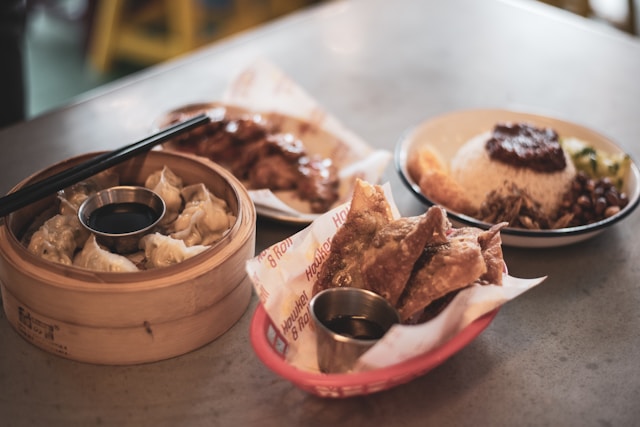
TL;DR: Tze Char—Singapore’s beloved style of Chinese cook-to-order dining—has remained a cultural cornerstone for decades. Rooted in accessibility, bold flavors, and communal eating, Tze Char stalls serve everything from casual weeknight dinners to milestone celebrations, making them one of the most enduring dining traditions in Singapore.
There’s a particular kind of magic that happens around a Tze Char table. Plates arrive in quick succession—a whole steamed fish glistening with soy and ginger, a clay pot of braised tofu still bubbling at the edges, a heap of wok-fried kang kong tossed in fermented shrimp paste. Someone reaches across the table. Conversations overlap. Rice bowls are refilled without asking.
This is Tze Char. And for millions of Singaporeans, it’s not just a meal—it’s a ritual.
Derived from the Hokkien phrase meaning “cook and fry,” Tze Char refers to the style of Chinese cook-to-order dining typically found at hawker centers, coffee shops, and standalone restaurants across Singapore. Unlike formal Chinese restaurants with fixed menus and strict price points, Tze Char stalls offer flexible, affordable, and endlessly customizable meals that can feed two people or twenty.
But what is it about Tze Char that keeps people coming back—generation after generation? The answer lies in a combination of culinary craftsmanship, cultural identity, and the kind of unpretentious warmth that no fine dining establishment can replicate.
What Makes Tze Char Different From Other Dining Styles?
To understand Tze Char’s appeal, it helps to understand what sets it apart.
At its core, Tze Char is defined by the wok. Skilled cooks use high-heat wok cooking—a technique that produces the coveted “wok hei,” or breath of the wok—to deliver dishes with a depth of smoky, caramelized flavor that home cooking rarely achieves. This is the defining characteristic that draws diners back, even when they could technically cook a similar dish at home.
Beyond technique, Tze Char is defined by its flexibility. Diners typically order from a broad menu of individual dishes—proteins, vegetables, tofu, rice, and noodles—sharing everything at the table. There’s no set meal structure, no minimum spend, and no dress code. A table of four might spend $30 or $80 depending on what they order. That accessibility is baked into the concept.
Contrast this with formal Chinese banquet dining, which is often reserved for weddings and major celebrations, or hawker stalls, which typically specialize in a single dish. Tze Char at HK Street Restaurant occupies a comfortable middle ground: more variety than a hawker stall, more relaxed than a restaurant, and more satisfying than either.
The Cultural Roots of Tze Char in Singapore
Tze Char’s origins in Singapore trace back to the mid-20th century, when Chinese immigrants—predominantly Hokkien, Cantonese, and Teochew—brought their culinary traditions to the island. As these communities settled, small-scale cooks began operating out of coffee shops and open-air stalls, offering homestyle Chinese dishes to laborers and families who needed a hot, hearty meal without paying restaurant prices.
Over decades, these humble setups evolved. Menus expanded. Signature dishes emerged. Certain stalls developed loyal followings that passed from parent to child, then grandchild. Today, some of Singapore’s most celebrated Tze Char stalls have been operating for 40, 50, even 60 years—a testament to the durability of the format.
This history matters because it explains why Tze Char carries an emotional weight that goes beyond food. For many Singaporeans, a particular Tze Char stall is tied to specific memories: a grandfather’s birthday dinner, a post-exam celebration, a weekly Sunday ritual. The food becomes inseparable from the people who ate it together.
What Are the Most Iconic Tze Char Dishes?
No two Tze Char menus are identical, but certain dishes appear across stalls with near-universal consistency. These are the dishes that define the cuisine and keep regulars returning.
Chilli Crab and Salted Egg Dishes
Chilli crab is perhaps Singapore’s most internationally recognized dish, and many of the best versions come not from formal seafood restaurants but from Tze Char stalls. The sauce—a thick, sweet-savory blend of tomato, chilli, and egg—is made to be mopped up with deep-fried mantou buns. Alongside chilli crab, salted egg preparations have surged in popularity over the past decade. Salted egg yolk prawns, sotong (squid), and even tofu have become modern Tze Char staples.
Zi Char Classics: Vegetables and Tofu
Stir-fried vegetables are the unsung heroes of Tze Char. Kang kong (water spinach) with sambal or belachan, French beans with minced pork, and kailan (Chinese broccoli) with oyster sauce are fixtures on most menus. These dishes are ordered almost automatically, providing a balance to richer, protein-heavy plates. Tofu, too, features prominently—whether deep-fried and served with a savory sauce, braised in a clay pot, or stuffed with fish paste.
Wok-Fried Rice and Noodles
A meal at a Tze Char stall rarely ends without rice or noodles. Yang zhou fried rice, cereal prawns with butter, and hokkien mee are perennial favorites. These carbohydrate-heavy dishes serve as the anchor of the meal and showcase the wok skills of the cook most directly.
Why Tze Char Works for Every Occasion
One of Tze Char’s most distinctive qualities is its range of social contexts. Few other dining formats can comfortably accommodate a quick Tuesday dinner for two and a 20-person birthday celebration without changing a single thing about the setup.
For everyday dining, Tze Char offers speed, value, and variety. A family can arrive, order, eat, and leave within an hour without feeling rushed. For larger gatherings—anniversaries, farewell dinners, Lunar New Year reunions—Tze Char stalls scale up naturally. Tables are pushed together, orders grow larger, and the food just keeps coming.
This scalability is partly practical and partly cultural. The communal sharing format means there’s no awkward splitting of individual dishes; everything lands in the middle of the table and gets divided organically. This mirrors how many Singaporean families approach meals generally: as a shared experience rather than an individual transaction.
Celebrations, in particular, have a natural affinity with Tze Char. A whole steamed fish is considered auspicious in Chinese culture—symbolic of abundance and completeness. Ordering one at a Tze Char stall for a birthday dinner costs a fraction of what a restaurant would charge, without sacrificing quality. That combination of cultural resonance and practical affordability is hard to beat.
How Tze Char Stalls Are Evolving Without Losing Their Soul
The Tze Char landscape is not static. Over the past decade, a new generation of operators has begun reimagining the format—elevating presentation, experimenting with ingredients, and targeting younger diners who might otherwise gravitate toward trendy restaurants.
Modern Tze Char establishments have introduced fusion twists: truffle-infused fried rice, foie gras with traditional Chinese preparations, or craft beer pairings with classic dishes. Some have moved into air-conditioned shophouse spaces, trading plastic chairs for proper seating without abandoning the communal spirit of the format.
Critically, the best of these newer operations have not discarded what makes Tze Char work. The wok is still central. The menus are still broad. The prices are still reasonable. What’s changed is the context around the food—cleaner environments, better service, and menu innovation that draws in diners who might not have considered Tze Char otherwise.
This evolution is important for the long-term health of the cuisine. As older stall owners retire, the question of succession looms over many beloved establishments. Younger cooks willing to carry the torch—while bringing fresh ideas to the format—are the most likely path to preserving what makes Tze Char irreplaceable.
The Reason Tze Char Still Feels Like Home
Tze Char endures not because it’s trendy or novel, but because it solves a problem no other dining format quite manages: how to feed a group of people—any size, any budget, any occasion—with food that feels genuinely satisfying.
The wok hei in a plate of stir-fried beef. The crackle of a deep-fried tofu skin. The communal silence that falls over a table when the food arrives and everyone simultaneously reaches in. These are small, repeatable moments that accumulate into something larger: a sense of belonging, of shared appetite, of culture made edible.
Tze Char is not trying to be anything other than what it is. And that, perhaps, is the most compelling reason it remains a local favorite.
Frequently Asked Questions About Tze Char
What does “Tze Char” mean?
“Tze Char” (煮炒) is a Hokkien phrase meaning “cook and fry.” The term refers to the style of Chinese cook-to-order dining common in Singapore, where dishes are prepared to order using wok cooking techniques over high heat.
How is Tze Char different from hawker food?
Hawker stalls typically specialize in a single dish or a narrow category of food. Tze Char stalls, by contrast, offer a broad menu of shareable dishes covering proteins, vegetables, tofu, rice, and noodles—making them better suited to group dining and varied meal preferences.
Is Tze Char expensive?
Tze Char is generally considered affordable relative to formal restaurant dining. A typical meal for four people ordering several shared dishes might cost between $30 and $60 SGD at a traditional coffee shop stall, though prices vary depending on the ingredients ordered and the location.
What is “wok hei” and why does it matter in Tze Char cooking?
Wok hei (鑊氣), literally “breath of the wok,” refers to the smoky, slightly charred flavor produced by cooking over extremely high heat in a seasoned wok. Achieving good wok hei requires skill and proper equipment, and it’s widely considered the defining quality that separates excellent Tze Char from mediocre versions.
Can Tze Char cater to dietary restrictions?
Most Tze Char menus offer vegetable and tofu dishes that are suitable for vegetarians, though cross-contamination with meat products is common given the shared cooking environment. Those with strict dietary restrictions should check directly with the stall before ordering.