In 2016, a woman in Texas put on a Chewbacca mask, laughed hysterically in her car, and accidentally broke the internet. Candace Payne’s “Chewbacca Mom” video on Facebook Live racked up millions of views in days, signaling the explosive arrival of live streaming into mainstream culture. Suddenly, everyone from major news networks to your next-door neighbor was going live.
But the digital landscape shifts quickly. Strategies that dominated marketing meetings five years ago often collect dust today. As we navigate 2024, businesses and content creators are asking a critical question: Is the live stream boom over, or has it simply evolved into something more sophisticated?
With the rise of short-form video on platforms like TikTok and Instagram Reels, you might assume attention spans are too short for long-form live content. Yet, data suggests otherwise. Live streaming hasn’t just survived; it has matured into a powerful engine for authentic connection and sales. This guide explores the current state of live streaming, why it remains a potent tool, and how you can leverage it effectively in a changing digital environment.
The Evolution of Live Video
To understand if live streaming is still effective, we first have to look at how it has changed. In the early days, novelty drove engagement. The simple act of broadcasting in real-time was enough to capture an audience. Quality was often low, connections were spotty, and the content was largely unstructured.
Today, the “novelty” phase is long gone. Audiences are no longer impressed by the mere existence of a live feed. They demand value. The platforms have also evolved. What started as simple broadcasts on Periscope and Facebook has expanded into a multi-platform ecosystem including Twitch, YouTube Live, LinkedIn Live, Instagram, and TikTok.
Crucially, the purpose has shifted. It’s no longer just about “being there.” It’s about “doing business.” The integration of e-commerce features—often called “live shopping”—has transformed live video from a purely social activity into a direct revenue channel. This shift from passive viewing to active participation and purchasing marks the most significant evolution in the medium.
Why Live Streaming Works: The Psychology of “Now”
Despite the popularity of polished, edited content, live streaming taps into deep-seated psychological triggers that pre-recorded video simply cannot replicate.
FOMO (Fear of Missing Out)
Live video is ephemeral by nature. Even if a replay is available later, the magic happens in the moment. The possibility that something unexpected could occur creates a sense of urgency. Viewers tune in because they want to be part of a shared experience as it unfolds, not just a passive consumer of past events.
Authenticity and Trust
We live in an era of filters, deepfakes, and heavily curated feeds. Trust in media and brands is fragile. Live streaming offers an antidote to perfection. It is raw and unedited. When a CEO stumbles over a word or a product demo has a minor hiccup, it humanizes the brand. This vulnerability builds trust. Viewers feel they are seeing the “real” you, which fosters a deeper emotional connection than a scripted ad ever could.
Instant Gratification and Interaction
The hallmark of live streaming is two-way communication. When a viewer types a question and the host answers it seconds later, that viewer feels seen and validated. This immediate feedback loop turns passive viewers into active community members. It transforms a monologue into a dialogue, significantly increasing engagement rates compared to static posts.
The State of Live Streaming by Platform
Effectiveness often depends on where you are streaming. Different platforms cater to different behaviors and demographics.
LinkedIn Live: The B2B Powerhouse
For B2B marketers, LinkedIn Live is arguably the most effective current channel. It allows businesses to host virtual events, webinars, and Q&A sessions directly where their professional audience hangs out.
- Why it works: It cuts through the noise of standard text posts. LinkedIn data has shown that live videos on their platform get 7x more reactions and 24x more comments than native video.
- Best for: Thought leadership, industry panels, product launches for enterprise tools.
TikTok and Instagram: The Gen Z & Millennial Hubs
On these platforms, live streaming is often spontaneous and personality-driven. It serves as a way to deepen the connection made through short-form reels.
- Why it works: The algorithms heavily favor live content, often pushing notifications to followers when an account goes live. It’s excellent for community building and “Get Ready With Me” (GRWM) style casual content.
- Best for: Influencer marketing, behind-the-scenes access, flash sales.
YouTube Live: The Search Engine Giant
YouTube remains the home for long-form content. Live streams here have a longer shelf life because YouTube is the world’s second-largest search engine. A live stream today becomes a searchable video asset tomorrow.
- Why it works: High-quality streaming capabilities and superior monetization options.
- Best for: Educational content, gaming, long-form tutorials, and podcasts.
Twitch: Not Just for Gamers
While still dominated by gaming, Twitch has expanded into “Just Chatting,” art, and music categories. It represents the pinnacle of community-driven live content.
- Why it works: The culture of Twitch is built entirely around the live experience. Viewers are conditioned to watch for hours, not minutes.
- Best for: Niche communities, creative processes, and brands targeting a younger, tech-savvy demographic.
Live Commerce: The Next Frontier
If you are wondering about the ROI of live streaming, look no further than Live Commerce. Originating in China, where it is a massive industry, live shopping is gaining traction globally.
This model blends entertainment with instant purchasing. A host demonstrates a product, answers questions about fit or features in real-time, and viewers can click a button on the screen to buy it without leaving the stream.
This effectively collapses the marketing funnel. A customer can go from awareness (seeing the product) to consideration (asking a question) to conversion (buying) in the span of five minutes. Beauty brands, fashion retailers, and tech gadget companies are seeing conversion rates on live shopping events that dwarf traditional e-commerce standards.
5 Metrics That Prove Live Streaming is Still Effective
It is easy to get caught up in anecdotal evidence, but the numbers tell a clearer story.
- Watch Time: Viewers tend to watch live video 3x longer than pre-recorded video. The suspense of “what happens next” keeps retention high.
- Engagement Rates: As mentioned earlier, the interactive nature of live chat drives significantly higher engagement. High comment counts signal to algorithms that the content is valuable, increasing organic reach.
- Cost-Effectiveness: Producing a polished 3-minute commercial can cost thousands of dollars in production, editing, and actors. A live stream requires a smartphone or a webcam and a decent light. The cost-per-minute of content produced is incredibly low.
- Community Growth: Live streams are community accelerators. Regular schedules create “appointment viewing,” turning casual followers into loyal fans who show up week after week.
- Repurposing Potential: One 60-minute live stream can be a content goldmine. It can be sliced into 10 TikToks, transcribed into a blog post, stripped for a podcast episode, and quoted for Twitter. This efficiency makes it a highly effective part of a broader content strategy.
Common Pitfalls (And Why Some Fail)
If live streaming is so effective, why do some businesses claim it doesn’t work? Usually, it comes down to execution errors.
- Lack of Promotion: Going live without telling anyone is like throwing a party and forgetting to send invitations. You cannot rely solely on the platform’s notification system. You must promote the stream via email and social posts days in advance.
- Zero Structure: “Just winging it” rarely works for brands. While you want authenticity, you also need a run-of-show. Dead air, awkward silences, and rambling monologues kill retention.
- Ignoring the Audience: If you treat a live stream like a TV broadcast and ignore the chat, you are missing the point. The audience is there to participate. Failing to acknowledge comments is the fastest way to lose viewers.
- Inconsistency: Building a live audience takes time. Doing one stream, seeing low numbers, and quitting is a common mistake. Success comes from showing up consistently at the same time, week after week.
How to create a successful Live Strategy in 2024
To ensure your live streaming efforts yield results, follow this strategic framework.
Define Your “Why”
Don’t go live just because everyone else is. What is the goal? Is it lead generation? Brand awareness? Customer support? Your goal dictates your format. If you want leads, host a gated webinar. If you want awareness, do an open Q&A on Instagram.
Invest in (Minimal) Gear
You don’t need a TV studio, but you do need to meet a baseline of quality.
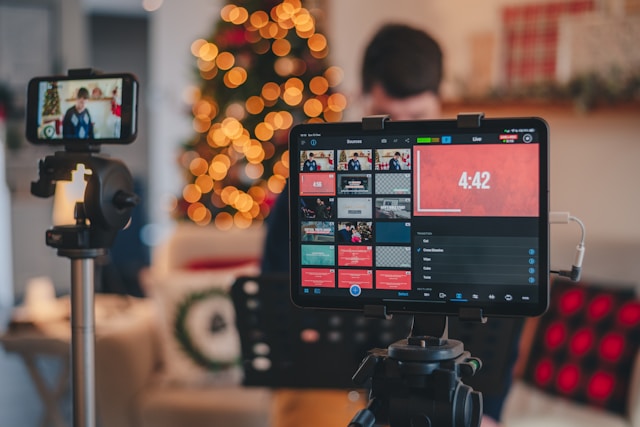
- Audio: This is more important than video. People will watch a blurry video, but they will leave instantly if the audio is crackly or echoing. Invest in a decent USB microphone or a lavalier for your phone.
- Lighting: A ring light or sitting in front of a window makes a world of difference.
- Internet: Ensure you have a stable upload speed. A choppy stream is unwatchable.
Create a Run-of-Show
Outline your stream.
- 0-5 mins: Intro and “warm-up” while people join (have a hook ready for replay viewers so they don’t get bored).
- 5-20 mins: Core content delivery.
- 20-40 mins: Interactive element/guest interview.
- 40-50 mins: Q&A.
- 50-60 mins: Call to Action (CTA) and wrap up.
The “Content Waterfall”
Plan how you will use the footage after the stream ends. Before you even hit “record,” know which segments you plan to clip for Shorts or Reels. This mindset ensures you deliver “soundbites” during the stream that are easily clippable later.
Frequently Asked Questions
Is live streaming better than pre-recorded video?
It isn’t necessarily “better,” but it serves a different purpose. Pre-recorded video is better for polished storytelling, tutorials requiring editing, and evergreen content. Live streaming is superior for community building, trust, and real-time interaction. A healthy video strategy uses both.
How often should a business go live?
Consistency beats frequency. It is better to go live once a month effectively than once a week haphazardly. Start with a monthly cadence to test your workflow and audience appetite, then increase to bi-weekly or weekly if the data supports it.
What if nobody watches?
This is every creator’s fear, but it’s rarely a disaster. First, everyone starts with zero viewers. Second, the replay value is often higher than the live value. Treat the live stream as a recording session for a video that will live on your profile forever. Even if only two people watch live, two hundred might watch the replay.
Do I need a script?
Avoid full scripts; reading from a teleprompter kills the authentic vibe of live video. Instead, use bullet points. Know your key talking points and your transition phrases, but leave room for natural conversation and improvisation based on audience comments.
The Verdict: Alive and Kicking
So, is live streaming still effective? The answer is a resounding yes—but with a caveat. The days of “lazy” live streaming are over. You cannot simply turn on a camera and expect the world to tune in.
Effectiveness in 2024 requires intention. It requires understanding that live video is a unique medium that blends entertainment, community, and commerce. It is a tool for brands that are brave enough to be imperfect and smart enough to value real-time connection.
If you are willing to show up consistently, engage deeply, and provide genuine value, live streaming remains one of the most cost-effective and high-impact ways to grow your brand in a crowded digital world. The camera is rolling—are you ready?