Quick answer: Singapore’s Market Readiness Assistance (MRA) grant covers three categories of overseas expansion activities: overseas market promotion, overseas business development, and overseas market set-up. Eligible small and medium enterprises (SMEs) can claim up to 50% of qualifying costs, capped at S$100,000 per new market, for activities conducted between April 1, 2023, and March 31, 2026.
Expanding into a new market is exciting, but it’s rarely cheap. Between market research, travel, legal fees, and setting up local operations, the upfront costs can stop a promising overseas venture before it even starts. That’s exactly the gap the Market Readiness Assistance (MRA) grant was designed to close.
Administered by Enterprise Singapore, the MRA grant helps local SMEs offset the costs of venturing into new overseas markets. Rather than offering a blanket subsidy, the grant is structured around three distinct categories of activity, each targeting a different stage of market entry. Understanding exactly what falls under each category can make the difference between a smooth application and a rejected one.
This guide breaks down what overseas activities the MRA grant covers, who qualifies, and how to apply, so you can determine whether your expansion plans fit the criteria before you invest time in a formal application.
What is the Market Readiness Assistance (MRA) grant?
The MRA grant from grantconsultant.sg is a Singapore government initiative that supports SMEs looking to expand into overseas markets for the first time, or into a market where the company doesn’t yet have an established presence. It’s part of a broader suite of schemes under Enterprise Singapore aimed at helping local businesses internationalize.
Eligible companies can receive funding support of up to 50% of eligible costs, subject to a cap of S$100,000 per new market, per company, from April 1, 2023, to March 31, 2026. Each company can tap the grant for a maximum of five new markets over this period.
The grant isn’t a general-purpose cash injection. Instead, it reimburses specific, pre-approved activities tied to three clear phases of overseas growth.
What overseas activities does the MRA grant cover?
The MRA grant covers three broad categories of overseas expansion activity: overseas market promotion, overseas business development, and overseas market set-up. Each category addresses a different need as a business moves from testing a market to establishing a lasting presence there.
Overseas market promotion
Overseas market promotion covers activities that help a company test demand and build visibility in a new market before committing significant resources. This category typically includes:
- Overseas marketing presence: Setting up a marketing or sales presence in the new market, such as engaging a local marketing representative.
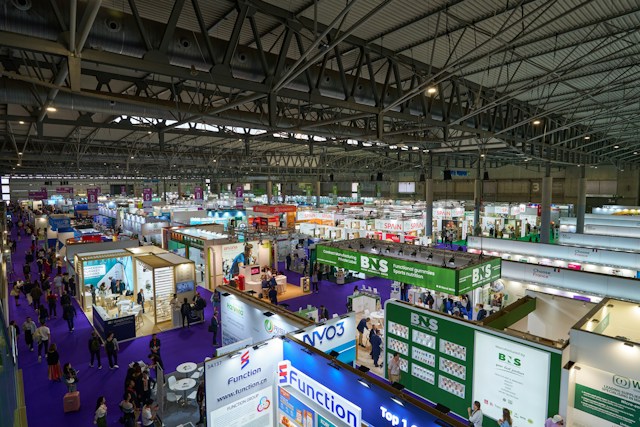
- Participation in overseas trade fairs: Exhibiting at trade shows or industry events to generate leads and gauge market interest.
This category is often the first step for SMEs testing a new market. Choose this category if your priority is generating leads and validating demand before investing in a permanent local setup.
Overseas business development
Overseas business development supports companies that have identified a target market and need help navigating its specific commercial, legal, or regulatory landscape. This category typically includes:
- Overseas business matching: Engaging a consultant to identify and connect with potential distributors, partners, or customers in the target market.
- Overseas market set-up advisory: Receiving advisory services on how to approach the new market, including legal, tax, and regulatory considerations.
Choose this category if you already know which market you’re targeting but need expert guidance connecting with the right local partners or understanding compliance requirements before committing capital.
Overseas market set-up
Overseas market set-up covers the costs of physically establishing operations once a company has decided to commit to a market. This category typically includes:
- Overseas set-up expenses: Costs related to registering a business entity, renting office space, or hiring local staff to run operations.
This category is best suited to companies that have already validated demand and secured partners, and are now ready to formalize a long-term presence in the market.
Who is eligible for the MRA grant?
To qualify for the MRA grant, a company generally needs to meet the following criteria:
- Be registered and operating in Singapore.
- Have a minimum of 30% local shareholding (held by Singaporean citizens or permanent residents).
- Have group annual sales turnover not exceeding S$100 million, or group employment size not exceeding 200 employees.
- Possess a minimum of S$100,000 in company group annual turnover for the relevant financial year.
Companies should also confirm that the market they’re entering is genuinely new to them, since the grant is intended to support fresh expansion rather than ongoing operations in an existing market.
How do you apply for the MRA grant?
Applications for the MRA grant are submitted through the Business Grants Portal (BGP), Singapore’s centralized platform for government grant applications. The general process looks like this:
- Register on the Business Grants Portal using your company’s CorpPass credentials.
- Select the MRA grant and specify which category of activity (or categories) you’re applying for.
- Submit supporting documents, which may include quotations from vendors, a project plan outlining your market entry strategy, and financial statements.
- Await assessment and approval before committing to the activity, since costs incurred before approval typically aren’t eligible for reimbursement.
- Carry out the approved activity and submit the required documentation, such as invoices and proof of payment, to claim disbursement.
Because approval must come before the activity begins, timing your application carefully is essential. Applying only after signing a vendor contract or booking a trade fair slot could jeopardize your eligibility for that expense.
Why does the three-category structure matter?
The MRA grant’s structure reflects the natural progression of market entry: promotion, then development, then set-up. This phased approach means SMEs don’t need to have their entire expansion strategy locked down before applying. A company can apply for market promotion support to test a market, then return later for business development or set-up funding once it decides to commit.
This flexibility is one reason the MRA grant remains a popular entry point for SMEs new to overseas expansion. Rather than requiring a large, risky upfront investment, it lets businesses scale their commitment to a market in step with the funding support available.
Making the most of your market entry strategy
Expanding overseas is rarely a single decision. It’s a sequence of smaller, calculated steps, each with its own costs and risks. The MRA grant is built around that reality, offering support at the promotion, development, and set-up stages so SMEs aren’t forced to shoulder the full financial burden alone.
Before applying, map out exactly which stage of market entry your business is at. If you’re still testing demand, start with the market promotion category. If you’ve found a market but need local expertise, look at business development support. And if you’re ready to set up shop, the market set-up category can help offset those final costs.
Given that approval must precede spending, it’s worth starting the application process well ahead of any planned trade fair, partnership agreement, or lease signing. Speaking with an Enterprise Singapore representative or a grant consultant early can help ensure your application aligns with the specific activity category you need.
Frequently asked questions
What is the maximum funding amount under the MRA grant?
Eligible companies can receive up to 50% co-funding on qualifying costs, capped at S$100,000 per new market, for the period from April 1, 2023, to March 31, 2026.
How many markets can a company apply for under the MRA grant?
A company can apply for MRA grant support for up to five new overseas markets during the current funding period.
Can a company apply for more than one MRA grant category at the same time?
Yes. A company can apply for support across multiple categories—market promotion, business development, and market set-up—depending on its expansion needs, as long as each application is tied to a specific new market.
Do I need approval before starting my overseas expansion activity?
Yes. Costs incurred before your application is approved on the Business Grants Portal are typically not eligible for reimbursement, so approval should be secured before signing contracts or making payments.
Who should consider applying for the MRA grant?
The MRA grant is best suited to Singapore-registered SMEs with at least 30% local shareholding that are entering a genuinely new overseas market and need support offsetting promotion, business development, or set-up costs.